New tool,
old eye
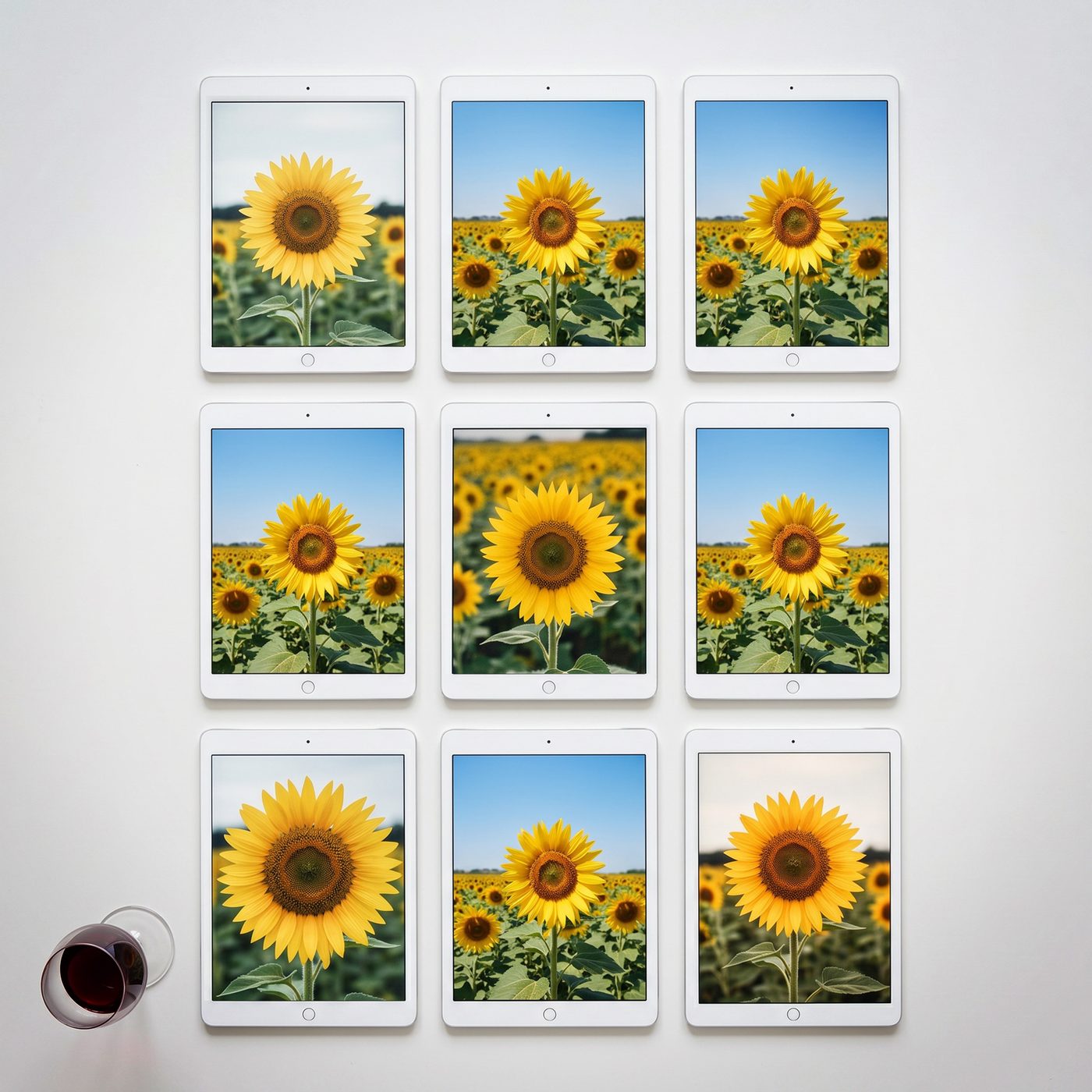
Well past seventy, David Hockney began painting on the iPad. The critics turned up their noses, he filled museums. The point is that the iPad did not make Hockney better, it made faster an eye built over sixty years of painting. The tool was new, the gaze was not, and indeed those digital paintings are unmistakably his, the same light, the same greens, the same attention to the Yorkshire landscape.
With generative AI the same identical principle applies. In the hands of someone who cannot see, it produces high-resolution noise, technically perfect images that say nothing, and feeds are filling up with them, all alike, all glossy, all empty. In the hands of someone who knows what to look for, light, composition, intention, matter, it produces value.
The prompt is not the skill, it is only the keyboard. The skill is describing an image that does not yet exist, and then recognising it when it appears, discarding the ninety-nine wrong ones that resemble it. This knowing how to see is not learned from the tool, it is carried into the tool.
And that is why the easier images become to produce, the rarer and more necessary the trained eye becomes. I wonder whether in ten years anyone will still pay those who produce images, or only those who know how to choose them.